
More Than Monuments: The Inspiring Story of Washington, D.C., Your City of Compromise, Courage, and Community!
Hello, D.C. dwellers and history buffs!
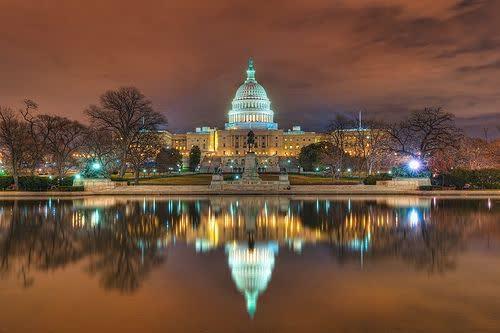
Have you ever stopped on your morning commute, looked up at the Capitol Dome, or paused by the Potomac, and felt that little shiver of awe? Our city Washington, D.C. is more than just a grid of power and politics. It’s a place built on big ideas, dramatic compromises, fiery courage, and a local heart that has kept it beating for over 200 years.
We’re going to take a friendly stroll through time and rediscover the surprising, proud, and often dramatic journey of the District of Columbia. Get ready to feel a surge of pride, because your city is absolutely extraordinary!
Chapter 1: The Ultimate Compromise A City is Born
Let’s start at the very beginning, and it all comes down to a legendary deal in 1790. After the Revolutionary War, the young United States needed a permanent capital, a "federal enclave" distinct from any state. But where? The North and the South were locked in a fierce debate. Northern states wanted the federal government to assume all their war debts; Southern states, led by Thomas Jefferson, were against it.
Enter the brilliant, tense dinner table negotiations between Alexander Hamilton and Thomas Jefferson. The result? A famous Compromise of 1790 Hamilton got his financial plan, and Jefferson secured the capital on the Potomac River, a site chosen by President George Washington himself, close to his beloved Mount Vernon.
It was an act of pure political will and nation building genius. Your city literally embodies the spirit of compromise that holds a union together!
The Grand Vision: Pierre L’Enfant and the Helpers
Once the site was chosen a 10-mile square carved out of land ceded by Maryland and Virginia the real work began. President Washington hired a French-born engineer named Pierre Charles L’Enfant to design the capital city, the “City of Washington.”
L’Enfant’s plan was audacious: grand avenues, ceremonial spaces, and an architectural layout that emphasized the separation of powers by placing the Capitol and the President’s House at the ends of a majestic boulevard. It was to be a symbol of democracy, a stunning capital to rival the great cities of Europe.
But wait, we can't forget the incredible team! L'Enfant worked alongside surveyor Andrew Ellicott and, crucially, a self-taught, free Black astronomer and mathematician named Benjamin Banneker. Banneker’s precise calculations and astronomical knowledge were vital to accurately laying out the capital's boundaries and street plans after L'Enfant was dismissed. Next time you walk those wide, planned avenues, remember that incredible precision came from the genius of Banneker, a true District pioneer.
Chapter 2: Growing Pains and the Fire of 1814
The city moved its official headquarters from Philadelphia in 1800, but in its early decades, D.C. was less of a gleaming capital and more of a struggling town. It was often called a “sleepy southern town,” a mixture of unpaved roads and grand buildings rising out of fields.
Then came the shocking test of the War of 1812.
In 1814, British troops marched into the capital. They burned the Capitol Building, the Treasury, and famously, the President’s House (later to be painted white to cover the scorch marks—giving it the name we know today!). It was a national humiliation.
But here is where the D.C. spirit shines: The Americans immediately rebuilt. The fire did not extinguish the vision; it galvanized it. The structures you see today are monuments to national resilience, having been literally reborn from the ashes of invasion.
Chapter 3: The Civil War and the Heart of the Union
The biggest crucible for Washington, D.C., was the American Civil War (1861-1865). Situated right on the border between the Union and the Confederacy, D.C. was constantly under threat.
The city transformed into a heavily guarded military hub. It was ringed by a network of forts (Fort Stevens is a great example!) built to defend the capital. The federal government ballooned, bringing thousands of soldiers, politicians, nurses, and refugees.
Crucially, D.C. was a beacon of freedom:
-
Compensated Emancipation: In 1862, D.C. became one of the first major U.S. cities to end slavery with the D.C. Compensated Emancipation Act. This act freed over 3,000 enslaved people, preceding the Emancipation Proclamation by eight months. That’s right—your city was on the leading edge of freedom!
-
Abolitionist Hub: The city became an unofficial hub for formerly enslaved people and a vital center for the abolitionist movement, including figures like Frederick Douglass, who lived in the Anacostia neighborhood at Cedar Hill.
The war cemented D.C.’s status as the indispensable center of the nation—a city of both profound national power and deep local consequence.
Chapter 4: From 'Magnificent Intentions' to a Modern Metropolis
After the Civil War, the city was desperate for modernization. In the 1870s, a new federally appointed government led a sweeping effort to transform D.C. They paved streets, installed sewers, planted over 50,000 trees, and erected new schools and markets. It was a golden age of municipal improvement the birth of the “New Washington.”
The early 20th century saw the emergence of the McMillan Plan (1901), which revitalized L’Enfant’s original vision. This plan established the magnificent, green expanse of the National Mall and ensured that future buildings would honor the city’s classical, monumental style.
This is the era when many of our most beloved landmarks came into being:
-
The planting of the stunning Cherry Trees (a gift from Japan in 1912).
-
The dedication of the majestic Lincoln Memorial (1922).
-
The construction of many of the grand federal buildings in the Federal Triangle.
Chapter 5: The Crossroads of Civil Rights and Global Power
The mid-20th century highlights Washington D.C.’s most powerful local/national identity: the stage for social change.
While the city housed the federal government, it also struggled with deep racial segregation, which, ironically, was sometimes enforced by federal mandate. The local D.C. community, particularly its significant and influential African American population, bravely fought back.
-
Marian Anderson's Concert (1939): When the Daughters of the American Revolution (DAR) barred the legendary Black opera singer Marian Anderson from performing in Constitution Hall, First Lady Eleanor Roosevelt arranged for her to sing on the steps of the Lincoln Memorial. Her performance, to an integrated crowd of 75,000, was a powerful, early moment in the Civil Rights Movement.
-
The March on Washington (1963): D.C.’s most famous moment of activism was when hundreds of thousands converged on the National Mall. It was at the Lincoln Memorial that Dr. Martin Luther King Jr. delivered his transformative "I Have a Dream" speech, forever linking the physical space of the capital with the moral aspirations of the nation.
Your city is where the struggle for justice became visible to the entire world, a place where people have literally marched on power to demand a better union.
Chapter 6: Home Rule and the Modern Heart of D.C.
Following the civil unrest and demographic shifts of the 1960s and 70s, D.C. fought for and achieved a major victory: Home Rule in 1973. After nearly a century of direct congressional control, the people of the District finally elected their own mayor and city council. This was a hard-won recognition of the city’s right to self-govern, a continuing struggle for full representation that defines the D.C. spirit to this day.
Today, D.C. is thriving. It’s a city of incredible global importance, housing world organizations and embassies. But more importantly, it's a dynamic, diverse, and vibrant community—a renaissance of culture, cuisine, and neighborhood identity. People are moving back downtown, reclaiming the historic center, and creating a truly layered city one that is both the nation’s monumental capital and a cherished home.
A Final Moment of Pride
The history of Washington, D.C., is a story about a place that was built, burned, rebuilt, and continually reimagined. It’s a city born from political compromise and matured through social struggle.
As a resident, you live in a place where:
-
Founding principles are etched into the very street grid.
-
Courage was shown in the face of invasion and injustice.
-
Community continues to thrive, even under unique political circumstances.
So, walk your streets with pride. Every neighborhood, every alley, and every monument tells a story of an American journey. You're not just living in a city of power; you're living in a living, breathing monument to democracy, resilience, and the enduring heart of a truly great city.

 English
 Arabic
 French
 Spanish
 Portuguese
 Deutsch
 Turkish
 Dutch
Dutch
 Italiano
 Russian
 Romaian
 Portuguese (Brazil)